




























































































Περιγραφή
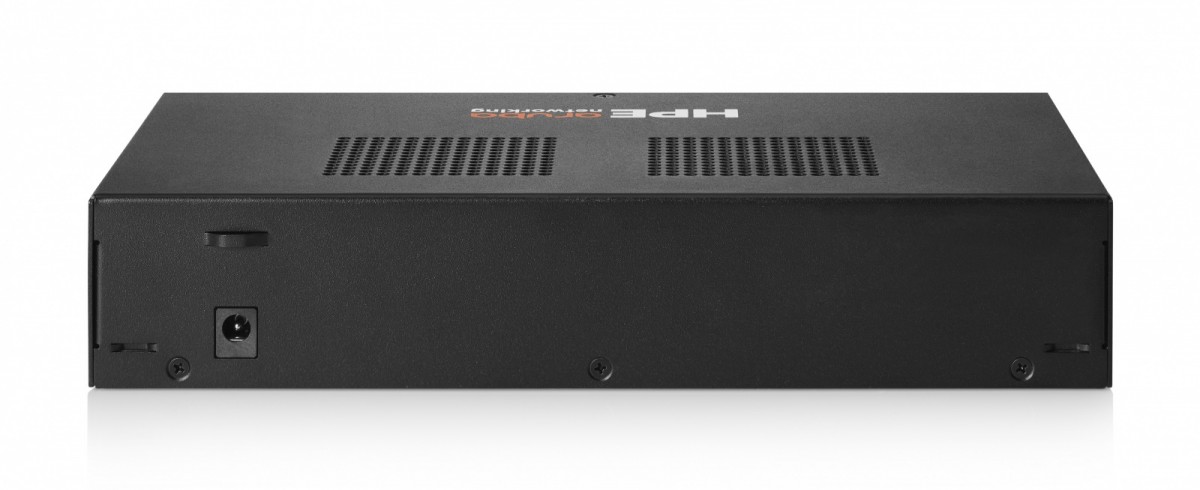
HPE Aruba Networking CX 6000 Switch Series
The HPE Aruba Networking CX 6000 Switch Series is a modern family of entry level access switches ideal for branch offices, midsize businesses, and small enterprises.
Optimized for reliable, simple, and secure access, the CX 6000 Switch series provides a convenient and cost-effective wired access solution for networks supporting IoT, mobile, and cloud applications. The CX 6000 Switch series is based on the HPE Aruba Networking ASIC architecture with the programmable AOS-CX operating system used across the entire HPE Aruba Networking CX portfolio for a more consistent, more efficient operator experience. This fully managed series has convenient built-in uplinks with up to 740W of PoE+ to support IoT devices such as security cameras and wireless APs. A compact and fanless model is ideal for use in quiet, small workspaces.
The HPE Aruba Networking CX 6000 Switch Series is easy to deploy and use with flexible management choices that include Web GUI, CLI, cloud based and on-premises HPE Aruba Networking Central management, so you can choose the best fit for your business and network environment. Delivering Layer 2 capabilities with enhanced access security, traffic prioritization, and Ipv6 support, the CX 6000 also simplifies ownership and brings peace of mind with switch software embedded with no subscription required to enable and a Limited Lifetime Warranty.
Throughput: 2
Forwarding rate: 1
Packet buffer: 1
MAC address table size: 8
Jumbo frame size: 9
Supported protocols and standards: RFC 1591 DNS (client) SSHv1/SSHv2 Secure Shell IEEE 802.1D MAC Bridges IEEE 802.1p Priority IEEE 802.1Q VLANs IEEE 802.1s Multiple Spanning Trees IEEE 802.1w Rapid Reconfiguration of Spanning Tree IEEE 802.3 Type 10BASE-T IEEE 802.3ab 1000BASE-T IEEE 802.3ad Link Aggregation Control Protocol (LACP) IEEE 802.3at Power over Ethernet IEEE 802.3az Energy Efficient Ethernet IEEE 802.3x Flow Control RFC 768 UDP RFC 783 TFTP Protocol (revision 2) RFC 792 ICMP RFC 793 TCP RFC 826 ARP RFC 1350 TFTP Protocol (revision 2) RFC 2131 DHCP client RFC 4330 Simple Network Time Protocol (SNTP) v4 RFC 951 BOOTP (VLAN 1 Only) RFC 1542 BOOTP Extensions (VLAN 1 only) IGMPv2/IGMPv3 IGMP/MLD Snooping RFC 1981 IPv6 Path MTU Discovery for IPv6 RFC 2460 IPv6 Specification RFC 2925 Remote Operations MIB (Ping only) RFC 3315 DHCPv6 (client only) RFC 3513 IPv6 Addressing Architecture RFC 3596 DNS Extension for IPv6 RFC 3176 sFlow RFC 4022 MIB for TCP RFC 4113 MIB for UDP (Partially) RFC 4251 SSHv6 Architecture RFC 4252 SSHv6 Authentication RFC 4253 SSHv6 Transport Layer RFC 4254 SSHv6 Connection RFC 4293 MIB for IP RFC 4419 Key Exchange for SSH RFC 4443 ICMPv6 RFC 4861 IPv6 Neighbor Discovery RFC 4862 IPv6 Stateless Address Auto-configuration RFC 1213 MIB RFC 1493 Bridge MIB RFC 2674 802.1p and IEEE 802.1Q Bridge MIB RFC 2737 Entity MIB RFC 2863 The Interfaces Group MIB IEEE 802.1AB Link Layer Discovery Protocol (LLDP) RFC 1098 A Simple Network Management Protocol (SNMP) ANSI/TIA-1057 LLDP Media Endpoint Discovery (LLDPMED) SNMPv1/v2c/v3 RFC 2819 Four groups of RMON: 1 (statistics), 2 (history), 3 (alarm) and 9 (events) RFC 1098 A Simple Network Management Protocol (SNMP) RFC 2474 DiffServ precedence, with 2/4/8 queues per port RFC 2475 DiffServ Architecture RFC 2597 DiffServ Assured Forwarding (AF) RFC 2598 DiffServ Expedited Forwarding (EF) IEEE 802.1X Port Based Network Access Control RFC 1492 TACACS+ RFC 2138 RADIUS Authentication RFC 2866 RADIUS Accounting Secure Sockets Layer (SSL)
QoS: To support congestion actions and traffic prioritization, the CX 6000 includes the following: Strict priority (SP) queuing Traffic prioritization (IEEE 802.1p) for real-time classification Class of Service (CoS) sets the IEEE 802.1p priority tag based on IP address, IP Type of Service (ToS), Layer 3 protocol, TCP/UDP port number, source port, and DiffServ Rate limiting sets per-port ingress enforced maximums and per-port, per-queue minimums Large buffers for graceful congestion management
Security: Access control list (ACL) support for both IPv4 and IPv6; allows for filtering traffic to prevent unauthorized users from accessing the network, or for controlling network traffic to save resources; rules can either deny or permit traffic to be forwarded; rules can be based on a Layer 2 header or a Layer 3 protocol header ACLs also provide filtering based on the IP field, source/ destination IP address/subnet, and source/ destination TCP/UDP port number on a per-VLAN or per-port basis Remote Authentication Dial-In User Service (RADIUS) Terminal Access Controller Access-Control System (TACACS+) delivers an authentication tool using TCP with encryption of the full authentication request, providing additional security Management access security for both on- and off-box authentication for administrative access. RADIUS or TACACS+ can be used to provide encrypted user authentication. Additionally, TACACS+ can also provide admin authorization services Control Plane Policing sets rate limit on control protocols to protect CPU overload from DOS attacks Supports multiple user authentication methods. Uses an IEEE 802.1X supplicant on the client in conjunction with a RADIUS server to authenticate in accordance with industry standards Supports MAC-based client authentication Concurrent IEEE 802.1X, Web, and MAC authentication schemes per switch port accepts up to 32 sessions of IEEE 802.1X, Web, and MAC authentications Secure management access delivers secure encryption of all access methods (CLI, GUI, or MIB) through SSHv2, SSL, and/or SNMPv3 Switch CPU protection provides automatic protection against malicious network traffic trying to shut down the switch ICMP throttling defeats ICMP denial-of-service attacks by enabling any switch port to automatically throttle ICMP traffic Identity-driven ACL enables implementation of a highly granular and flexible access security policy and VLAN assignment specific to each authenticated network user STP BPDU port protection blocks Bridge Protocol Data Units (BPDUs) on ports that do not require BPDUs, preventing forged BPDU attacks Dynamic IP lockdown works to block traffic from unauthorized hosts, preventing IP source address spoofing STP root guard protects the root bridge from malicious attacks or configuration mistakes Dynamic ARP protection blocks ARP broadcasts from unauthorized hosts, preventing eavesdropping or theft of network data DHCP (snooping) protection blocks DHCP packets from unauthorized DHCP servers, preventing denial-of-service attacks Supports DHCPv4 Relay Port security allows access only to specified MAC addresses, which can be learned or specified by the administrator MAC address lockout prevents particular configured MAC addresses from connecting to the network Source-port filtering allows only specified ports to communicate with each other Secure shell encrypts all transmitted data for secure remote CLI access over IP networks Secure Sockets Layer (SSL) encrypts all HTTP traffic, allowing secure access to the browser based management GUI in the switch Secure FTP allows secure file transfer to and from the switch; protects against unwanted file downloads or unauthorized copying of a switch configuration file Critical Authentication Role ensures that important infrastructure devices such as IP phones are allowed network access even in the absence of a RADIUS server MAC Pinning allows non-chatty legacy devices to stay authenticated by pinning client MAC addresses to the port until the clients logoff or get disconnected Security banner displays a customized security policy when users log in to the switch Dynamic IPv4 Lockdown works with DHCP protection to block traffic from unauthorized hosts, preventing IP source address spoofing DHCP smart relay allows the DHCP relay agent to use secondary IP addresses when the DHCP server does not reply the DHCP-OFFER message
Management, monitoring, configuration: Intuitive, easy to use switch Web GUI provides easy to use dashboard, robust tool set and switch insights Cloud-based HPE Aruba Networking Central provides single pane of glass management of wired and wireless network with automated alerts and easy to use configuration Built-in programmable and easy-to-use REST API interface Industry-standard CLI with a hierarchical structure for reduced training time and expense. Delivers increased productivity in multivendor environments sFlow (RFC 3176) is ASIC-based wire speed network monitoring and accounting with no impact on network performance; network operators can gather a variety of network statistics and information for capacity planning and real-time network monitoring purposes Management security restricts access to critical configuration commands, provides multiple privilege levels with password protection and local and remote syslog capabilities allow logging of all access SNMPv1/v2c/v3 support provides Read capability of industry standard Management Information Base (MIB), and private extensions SNMP support includes: Write Set Speed and Duplex, Write Port Security, Write POE Priority, Write Config Mgmt, SNMP-Read single OID for average CPU and memory, SNMP MIB View SNMP Trap include: Transceiver Traps (insertion/removal), SNMP Trap, SNMP MIB-SNMB Authentication, SNMPv2 MIB, Port Sec MIB-Port Sec, Config MIB-Running Config Change, Config MIB, AAA Server MIB, AAA Server State Remote monitoring (RMON) with standard SNMP to monitor essential network functions. Supports events, alarms, history, and statistics groups as well as a private alarm extension group TFTP and SFTP support offers different mechanisms for configuration updates; trivial FTP (TFTP) allows bidirectional transfers over a TCP/ IP network; Secure File Transfer Protocol (SFTP) runs over an SSH tunnel to provide additional security Debug and sampler utility supports ping and traceroute for IPv4 and IPv6 Network Time Protocol (NTP) synchronizes timekeeping among distributed time servers and clients; keeps timekeeping consistent among all clock-dependent devices within the network so the devices can provide diverse applications based on the consistent time IEEE 802.1AB Link Layer Discovery Protocol (LLDP) advertises and receives management information from adjacent devices on a network, facilitating easy mapping by network management applications Dual flash images provides independent primary and secondary operating system files for backup while upgrading Multiple configuration files can be stored to a flash image Unidirectional link detection (UDLD) monitors the link between two switches and blocks the ports on both ends of the link if the link goes down at any point between the two devices
L2 features: The following Layer 2 services are supported: VLAN support and tagging support for IEEE 802.1Q (4094 VLAN IDs) and 512 VLANs simultaneously Jumbo packet support improves the performance of large data transfers; supports frame size of up to 9,220 bytes Rapid Per-VLAN Spanning Tree (RPVST+) allows each VLAN to build a separate spanning tree to improve link bandwidth usage; is compatible with PVST+ STP supports standard IEEE 802.1D STP, IEEE 802.1w Rapid Spanning Tree Protocol (RSTP) for faster convergence, and IEEE 802.1s Multiple Spanning Tree Protocol (MSTP) MVRP allows automatic learning and dynamic assignment of VLANs Bridge Protocol Data Unit (BPDU) tunneling transmits STP BPDUs transparently, allowing correct tree calculations across service providers, WANs, or MANs Port mirroring duplicates port traffic (ingress and egress) to a monitoring port; supports 4 mirroring groups Internet Group Management Protocol (IGMP) Controls and manages the flooding of multicast packets in a Layer 2 network
L3 features: Address Resolution Protocol (ARP) determines the MAC address of another IP host in the same subnet; supports static ARPs Domain Name System (DNS) provides a distributed database that translates domain names and IP addresses, which simplifies network design; supports client and server Supports internal loopback testing for maintenance purposes and increased availability; loopback detection protects against incorrect cabling or network configurations and can be enabled on a per-port or per VLAN basis for added flexibility Static IP routing provides manually configured routes. Dual stack static IPv4 and IPv6 routing provides simple manually configured IPv4 and IPv6 routing Dual IP stack maintains separate stacks for IPv4 and IPv6 to ease the transition from an IPv4-only network to an IPv6-only network design
Power consumption: 1
Environment requirements: Operating Temperature: 32°F to 104°F (0°C to 40°C) up to 5000 ft (1.5 km) derate -1°C for every 1000 ft (305 m) from 5000 ft (1.5 km) to 10000 ft (3.0 km) Operating Relative Humidity: 5% to 95% at 104°F (40°C) noncondensing Non-Operating Temperature: -40°F to 158°F (-40°C to 70°C) up to 15000 ft (4.6 km) Non-Operating Storage Relative Humidity: 5% to 90% @ 149°F (65°C) noncondensing
Power supply: 12V DC
Dimensions: 4.39 x 14.59 x 22.60 cm
Weight: 1
Αξιολογήσεις
Δεν υπάρχει καμία αξιολόγηση ακόμη.